
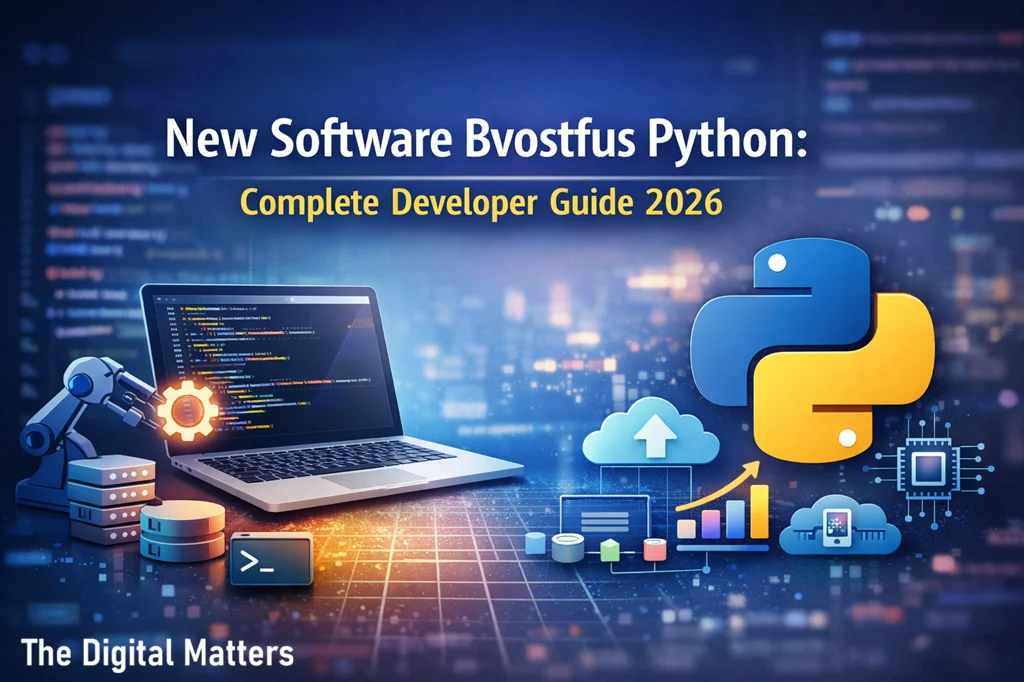
The Python ecosystem moves fast. New frameworks appear, automation tools evolve, and developer utilities surface almost weekly. Recently, one name has started circulating in tech forums and developer circles: New Software Bvostfus Python.
If you’re wondering what this new software is, how it works, and whether it’s worth exploring, you’re in the right place. In this deep dive, we’ll break down the architecture, features, potential use cases, strengths, and limitations of Bvostfus Python in a practical, no-hype way.
What Is New Software Bvostfus Python ?
New Software Bvostfus Python is emerging as a modular Python-based software environment designed to streamline development workflows, automate backend operations, and enhance performance in scalable systems.
Unlike traditional standalone libraries, New Software Bvostfus Python appears to function as an extensible development layer. It integrates scripting flexibility, automation logic, and data processing capabilities within a lightweight framework.
At its core, Bvostfus Python emphasizes:
-
Developer efficiency
-
Modular design
-
Scalable deployment
-
Clean architecture patterns
-
Automation-driven workflows
While still new in the ecosystem, early adopters describe it as a productivity accelerator for backend engineers and system architects.
Why New Software Bvostfus Python Is Gaining Attention
The reason Bvostfus Python is generating interest comes down to three factors:
-
Workflow optimization
-
Performance-aware design
-
Extensibility without complexity
Modern development teams face pressure to ship faster while maintaining code quality and scalability. Bvostfus Python appears to target exactly that gap by reducing friction in common backend tasks.
Core Features of Bvostfus Python
Let’s examine the standout components that define this new software.
1. Modular Framework Structure
Bvostfus Python uses a plug-and-play module system. Developers can attach:
-
Data processing modules
-
API connectors
-
Automation scripts
-
Task schedulers
-
Monitoring hooks
This modular approach makes scaling simpler compared to monolithic Python systems.
2. Automation Engine
One of the most discussed capabilities of Bvostfus Python is its built-in automation layer.
It supports:
-
Scheduled background jobs
-
Event-driven triggers
-
Workflow pipelines
-
Conditional task execution
-
Batch processing
Instead of relying solely on third-party schedulers, Bvostfus Python embeds automation into the framework itself.
3. Lightweight Runtime
Performance benchmarks shared by early users suggest that Bvostfus Python runs with reduced memory overhead compared to heavier frameworks.
This makes it suitable for:
-
Microservices
-
Edge deployments
-
Cloud-native applications
-
Containerized environments
In DevOps workflows, lightweight services reduce infrastructure costs and speed up deployment cycles.
4. Clean API Integration
Bvostfus Python reportedly simplifies API integrations through:
-
Built-in request handling
-
Structured response mapping
-
Error-handling utilities
-
Logging instrumentation
This is particularly useful for SaaS developers managing multiple external integrations.
Potential Use Cases for New Software Bvostfus Python
Although still emerging, New Software Bvostfus Python seems well-positioned for several practical applications.
Backend Automation Systems
Businesses can use it to automate repetitive processes such as:
-
Data synchronization
-
Report generation
-
Scheduled notifications
-
Database maintenance
Data Processing Pipelines
With modular components, Bvostfus Python can support:
-
ETL workflows
-
Data transformation scripts
-
Real-time processing triggers
-
File parsing and validation
API-Driven Microservices
For teams building scalable APIs, New Software Bvostfus Python offers:
-
Structured endpoint routing
-
Background task management
-
Logging and observability hooks
-
Configurable middleware layers
Internal Developer Tools
Some teams may use Bvostfus Python to build:
-
Deployment helpers
-
Task orchestration scripts
-
Internal dashboards
-
Monitoring utilities
Its lightweight architecture makes it adaptable to multiple internal tooling scenarios.
Architecture Overview
The architecture of New Software Bvostfus Python follows modern software engineering principles:
-
Separation of concerns
-
Service-oriented design
-
Reusable components
-
Event-driven triggers
-
Decoupled execution layers
This aligns well with contemporary cloud computing environments.
High-Level Component Flow
-
Input trigger (API call, file upload, or schedule)
-
Processing module execution
-
Validation and transformation
-
Optional automation sequence
-
Output delivery or database write
This streamlined flow reduces unnecessary abstraction layers.
How New Software Bvostfus Python Compares to Traditional Frameworks
Here’s a simplified comparison.
| Feature | Bvostfus Python | Traditional Framework |
|---|---|---|
| Setup Complexity | Moderate | Varies (often heavy) |
| Automation Built-In | Yes | Often external |
| Modularity | High | Depends on framework |
| Resource Usage | Lightweight | Can be heavy |
| Learning Curve | Manageable | Sometimes steep |
While it may not replace established frameworks immediately, Bvostfus Python offers a focused alternative for automation-first systems.
Developer Experience
User feedback suggests Bvostfus Python emphasizes developer ergonomics:
-
Clear configuration files
-
Minimal boilerplate code
-
Logical folder structures
-
Built-in logging support
-
Straightforward dependency management
This reduces onboarding time for new team members.
Security and Performance Considerations
Security is a major concern for any new software tool.
Bvostfus Python supports:
-
Structured error handling
-
Config-based secret management
-
Modular authentication logic
-
Input validation layers
Performance-wise, its streamlined runtime allows efficient request handling and asynchronous processing where applicable.
However, as with any emerging software, extensive real-world stress testing is essential before enterprise adoption.
Deployment Flexibility
Bvostfus Python appears compatible with:
-
Docker containers
-
Kubernetes clusters
-
Cloud VM instances
-
Serverless environments
-
CI/CD pipelines
This makes it adaptable to modern DevOps ecosystems.
For startups and scaling SaaS products, deployment flexibility can be a deciding factor.
Challenges and Limitations
Because Bvostfus Python is new, it may face:
-
Limited documentation
-
Smaller community support
-
Fewer third-party extensions
-
Ongoing feature refinement
Established frameworks benefit from mature ecosystems. Bvostfus Python will need time to build that trust and stability.
Who Should Consider New Software Bvostfus Python ?
This software may be ideal for:
-
Backend engineers building automation-heavy systems
-
Startups needing lean infrastructure
-
Developers creating internal tools
-
Teams prioritizing modular architecture
-
Engineers experimenting with new Python tooling
It may not yet be suitable for mission-critical enterprise systems without further maturity.
Future Outlook
If development momentum continues, Bvostfus Python could evolve into a respected niche framework focused on automation-driven backend services.
Future improvements might include:
-
Expanded plugin ecosystem
-
Advanced monitoring dashboards
-
Improved developer documentation
-
Enhanced scalability testing
-
Broader community adoption
Software longevity depends on active maintenance and real-world validation.
Final Thoughts
Bvostfus Python represents an interesting development in the Python software landscape. Its modular design, automation capabilities, and lightweight runtime position it as a potential solution for developers seeking streamlined backend operations.
While it’s still early days, the concept behind Bvostfus Python aligns with modern engineering demands: simplicity, scalability, and efficiency.
If you’re curious, experiment in a sandbox environment first. Evaluate performance, test integrations, and assess how it fits within your current stack.
New software tools often begin quietly — but the right architecture and strong community can turn them into long-term staples.